Corporate retreat venues in Provence: how to choose the right format
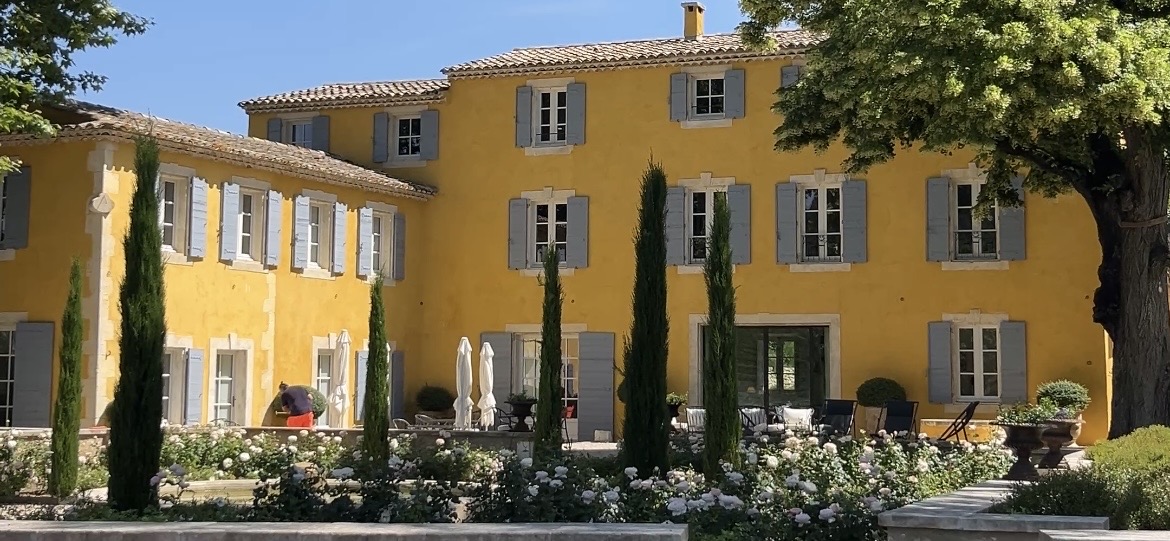
Most searches for a corporate retreat venue in Provence start with photographs and end in disappointment, because a photograph tells you what a place looks like and nothing about what it does to your programme. The venue decides your budget, your timings, your catering and how many vehicles you end up paying for. This guide sets out the four formats that actually exist in the region, what each one asks of you in return, and the questions worth settling before anyone falls in love with a terrace.
First proposal within 48 hours.
The four formats, in plain terms
Provence offers four venue types for a team of ten to fifty. A private estate taken over entirely, a boutique hotel in or near a village, a five star hotel in Marseille or Aix, and a working wine estate. They are not four price points on the same scale. Each one solves a different problem and creates a different one.
The private estate, taken over entirely
This is the format most companies picture. A stone mas or bastide, a pool, a long table under the plane trees, nobody else on the property. It is the strongest format for cohesion, because the group never disperses and the evenings are where the real work happens.
What it asks in return is self sufficiency. An estate is not a hotel. There is rarely a permanent kitchen brigade, rarely a meeting room with fixed screens, rarely anyone at a desk at two in the morning. Everything you would take for granted in a hotel has to be brought in and coordinated: the chef and their team, the equipment, the housekeeping rhythm, the transport for every movement off site. That coordination is the whole job, and it is why estates are the format where the difference between a well run retreat and a chaotic one is widest.
The boutique hotel in a village
A boutique hotel gives you a kitchen, a service team and a front desk, and it removes most of the coordination burden in one move. Village locations also mean your group can walk somewhere in the evening rather than needing a vehicle for every glass of wine, which matters more than people expect on a three night programme.
The trade off is exclusivity. Below a certain group size, a hotel will not privatise, so your team shares the breakfast room and the terrace with other guests. For a leadership offsite where the conversations are confidential, that is a real constraint. Ask early whether a full buyout is possible at your headcount and at your dates, because the answer changes completely between June and November.
The five star urban hotel
For groups arriving from several countries on the same morning, a hotel in Marseille or Aix is often the rational choice. Meeting infrastructure is already there, the airport is close, participants who arrive late or leave early do not disrupt anyone, and nobody needs a car.
What you lose is the sense of departure. A retreat in a city hotel feels like a longer version of the office, and the shift in perspective that people came for does not always happen. The usual answer is a hybrid: base the group in the city and take them out for one full day inland or on the water, which keeps the logistics simple and still produces the day everyone remembers.
The working wine estate
A wine estate is the most distinctive of the four and the most seasonal. Autumn is both the most beautiful moment on an estate and the moment when the estate is busy with its actual business, so availability during harvest is thin and the welcome is necessarily divided.
Bedroom capacity on a working estate is usually modest, which caps the format at smaller groups or forces a split between the estate and a nearby property. Split accommodation is workable, but it doubles the transport plan and it quietly undoes some of the cohesion you booked the estate for in the first place.
Stated capacity is not usable capacity
A property advertised for thirty guests is describing beds, not a retreat. The number that matters is how many people can sit in one room and work, and how many can eat at one table.
Three questions settle it. How many bedrooms are genuinely single occupancy, given that most estates count double rooms and that a leadership group rarely shares. Is there one indoor space that holds the entire group seated, for the day the mistral makes the terrace unusable. Can everyone eat at a single table, or does dinner split into two rooms, because a group that eats separately does not bond.
The kitchen question
This is the single most underestimated line in a retreat budget. A venue without a professional kitchen does not simply mean hiring a chef. It means the chef arrives with equipment, needs preparation space, needs cold storage for three days of produce, and needs a service team for a group that all eats at once.
Some estates have a kitchen that a private chef can work in. Some have a domestic kitchen that will not sustain forty covers. Some restrict outside caterers to a short approved list. All three situations are workable. What is not workable is discovering which one applies after the contract is signed. We set out the same reasoning in budget terms on our page on what a corporate retreat in Provence costs, where catering sits directly under accommodation.
Distance is a budget line, not a detail
Every kilometre between the venue and the activities becomes vehicles, drivers and dead time. A property forty minutes from everything is not slightly less convenient than one fifteen minutes away, it is a different transport plan, and on a group of forty it can mean two minibuses running all day instead of one.
Read distances in travel time on the actual roads, not in kilometres on a map. Provence is full of short distances that take a long time. And check the road itself: some of the most beautiful properties in the Luberon and the Alpilles sit at the end of lanes that a full size coach cannot physically use, which quietly forces you into multiple smaller vehicles.
When to hold it
Timing changes which venues are available to you at all, so it belongs in the venue decision rather than after it.
July and August are difficult. Heat, crowds and peak pricing work against a working programme, and the best properties are booked long ahead by private clients. September is the month everyone asks for and the hardest to secure, because the finest estates are taken by weddings almost every weekend. Mid October and the second half of November are the two windows where you get the best properties on the best terms, with mild days and terraces still in use. January and February suit shorter urban formats well, when the point is to work rather than to be outdoors.
Marseille as the arrival point
Marseille Provence airport takes direct flights from most major European cities and puts you twenty five minutes from Aix and around forty minutes from the edge of the Luberon. For a team assembling from several countries, door to venue time is often shorter than reaching a comparable venue in the Alps or the British countryside, which is worth checking before ruling the region out on distance.
How we work on venues
We do not own or represent any property, so we have nothing to place. We source against the brief, we visit what we propose, and we tell you when a beautiful venue is the wrong answer for your group. The full programme side sits on our page on corporate retreats in Provence, the shorter formats on company offsites, and the leadership formats on executive retreats in France. For larger headcounts, see group travel in Provence. If you already have dates and a rough headcount, write through our contact page and we come back with a first proposal within 48 hours.
First proposal within 48 hours.
Frequently asked questions
What are the best venues for a company offsite in Marseille?
For a company offsite based in Marseille itself, the realistic options are the five star hotels above the Vieux-Port for groups that need meeting infrastructure and fast airport access, design led boutique hotels for smaller creative teams, and private villas along the Corniche for groups that want exclusivity within the city. Most offsites based in Marseille work best when the city provides the base and one full day is spent outside it, on the water or inland.
How many bedrooms do you need for a corporate retreat?
Count one bedroom per participant unless you know for certain that people will share. Advertised capacity usually assumes double occupancy, so a property listed for thirty guests may only hold sixteen or eighteen people in single rooms. Add one room if a facilitator or chef is staying on site.
Is it better to book a private estate or a hotel for a corporate retreat?
An estate gives exclusivity and cohesion but requires everything to be brought in and coordinated, from the chef to the transport. A hotel gives you a kitchen, a service team and meeting infrastructure but rarely full privacy below a certain group size. Estates suit groups that want the evenings to matter; hotels suit groups arriving from several countries with a tight agenda.
When is the best time of year for a corporate retreat in Provence?
Mid October and the second half of November are the two strongest windows: the best properties are available, the terms are favourable and the days are still mild. September is excellent in principle but the finest estates are largely taken by weddings. July and August are difficult because of heat, crowds and peak pricing.