Sainte-Baume: ancient forest, sacred sites and spiritual immersion
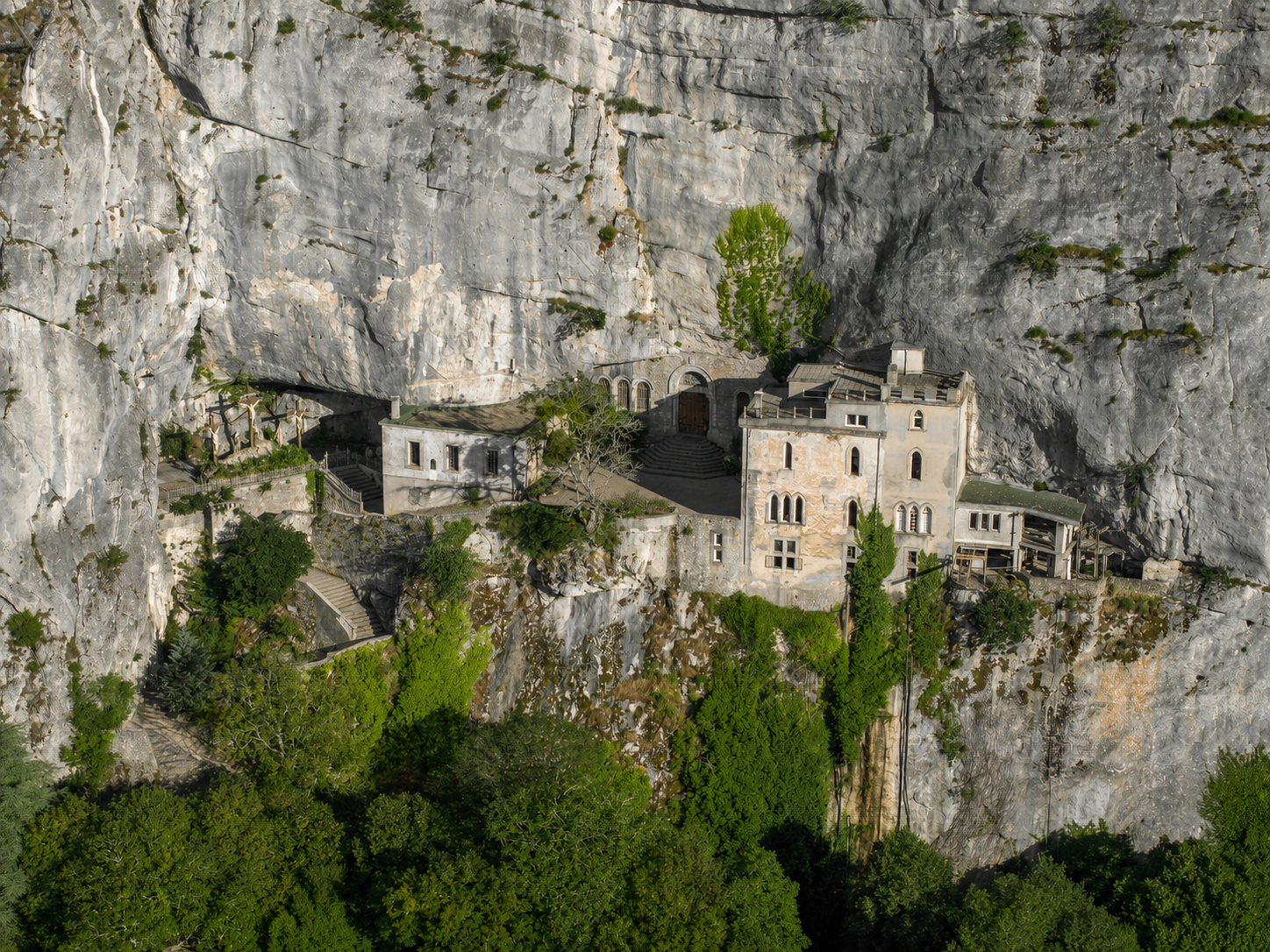
The Sainte-Baume massif is one of the most extraordinary and least-known landscapes in France. A sacred mountain, an ancient forest, a centuries-old pilgrimage route and a living monastic community — Sainte-Baume offers experiences of remarkable depth and rarity. Aura Provence designs private visits and spiritual immersion programmes at Sainte-Baume for travel agencies, wellness retreat groups and private clients.
The forest of Sainte-Baume: a living relic
The forest that covers the north face of the Sainte-Baume massif is unlike any other in the Mediterranean region. It is a relic of the dense European forest that covered most of the continent before the Bronze Age — a community of linden trees, yews, maples and beeches that has no equivalent in Provence. It was preserved through the centuries by the monks and pilgrims who considered it sacred, and today it feels genuinely ancient, almost alpine, despite lying less than an hour from Marseille.
Botanists describe the forest as a relict ecosystem: a fragment of the cool, deciduous forest that retreated north as the climate warmed after the last ice age, but which survived here because of the unusual microclimate created by the cliff face above. Walking through it in summer, the temperature drops noticeably; the air carries the smell of moss and old wood; and the silence is genuine. For groups arriving from cities, the contrast with the surrounding Provençal landscape is one of the most striking sensory shifts in the region.
Mary Magdalene and the Sainte-Baume grotto
According to Provençal Christian tradition, Mary Magdalene arrived in the region by boat — together with Lazarus, Martha, and others — after the death and resurrection of Jesus Christ. She is said to have spent the last thirty years of her life in a cave on the south face of the Sainte-Baume cliff, in solitary contemplation and prayer.
The grotto is today a functioning sanctuary, maintained by Dominican friars. It is accessible via a forest path of approximately 45 minutes, and the combination of the walk through the ancient trees, the gradual ascent of the limestone face, and the arrival at the candlelit grotto cut into the rock produces an experience of extraordinary emotional and spiritual power — for pilgrims and non-religious visitors alike.
The Sainte-Baume is considered the third most important pilgrimage site in Christendom after Jerusalem and Rome. Yet it receives a tiny fraction of those sites' visitors, giving it a quality of silence and presence that is increasingly rare.
For more than a thousand years, kings, popes and ordinary pilgrims have walked the same path. Louis IX (Saint Louis), Catherine de Medici, Louis XIV, and seven popes are recorded among the visitors. The ex-voto plaques covering the grotto walls span centuries and languages, leaving a layered, intimate record of human longing that very few other sites in Europe can match.
Saint-Maximin and the reliquary
The pilgrimage to Sainte-Baume traditionally combines the grotto with a visit to the Basilica of Saint-Maximin-la-Sainte-Baume, twenty minutes away. The basilica — one of the largest Gothic buildings in the South of France — houses the relics of Mary Magdalene in a 19th-century gilded reliquary, displayed in the crypt. The juxtaposition of the wild grotto and the formal basilica gives groups a complete sense of the spiritual and historical depth of the tradition.
Sainte-Baume in a wellness retreat programme
In our wellness retreat programmes, a guided visit to Sainte-Baume — conducted in silence, with a knowledgeable spiritual or contemplative guide and followed by a collective reflection session — is often the most quietly powerful part of a programme. The combination of physical effort, natural beauty, sacred history and contemplative atmosphere creates conditions for depth of experience that are very difficult to engineer in any other way.
For corporate retreat groups, we frame the experience differently: not as a religious visit but as an exercise in collective silence and shared attention. Walking together for 45 minutes without speaking, then sitting together in the grotto for thirty minutes, produces a quality of group cohesion that no team-building activity can replicate. The debrief that follows — back at the hotel, in the early evening — is often among the most candid conversations of the retreat.
Frequently asked questions
How long does a Sainte-Baume visit take?
A meaningful visit to the Sainte-Baume grotto — including the forest walk, the grotto experience and time for quiet reflection — takes approximately 3 to 4 hours. We recommend combining it with a lunch at a local Provençal table in the village below.
Is the Sainte-Baume walk accessible for all fitness levels?
The walk to the grotto involves a 45-minute uphill path on uneven terrain. It is manageable for most people with reasonable fitness but is not suitable for guests with significant mobility limitations. We can discuss alternative access options for mixed-ability groups.
Is the Sainte-Baume only relevant for religious or spiritual groups?
Not at all. The site has profound spiritual history, but its appeal is universal: the ancient forest is a botanical wonder, the geological setting is dramatic, and the atmosphere of silence and concentration is moving for visitors of any background. Many of our most appreciative guests have been entirely secular.
How far is Sainte-Baume from Marseille?
Approximately 50 minutes by private vehicle. The site is also accessible from Aix-en-Provence (45 minutes), the Luberon (1h30) and the Côte d'Azur. We commonly include it as a half-day or full-day component of multi-day Provence programmes.
Can you arrange a private silent retreat at Sainte-Baume?
Yes. The Hôtellerie de la Sainte-Baume, run by the Dominican community, accommodates retreatants for stays of one night or longer. We coordinate access, design the schedule (silent walks, daily Mass for those who wish, individual reflection time), and provide spiritual or contemplative accompaniment in French or English.