Luberon private tour: villages, vineyards and the soul of inland Provence
The Luberon is the most quintessentially Provençal landscape in France: a regional nature park of limestone hills, perched medieval villages, lavender fields and centuries-old wine estates stretching across the Vaucluse. Aura Provence designs private tours of the Luberon for travel agencies, incentive groups and private clients.
The perched villages of the Luberon
Gordes is arguably the most iconic village in all of Provence. Built entirely in pale golden stone on the summit of a steep rocky promontory, it has attracted artists, writers and architects for over a century. Its light — the particular quality of Provençal sunlight filtered through limestone dust — is unlike anything in northern Europe.
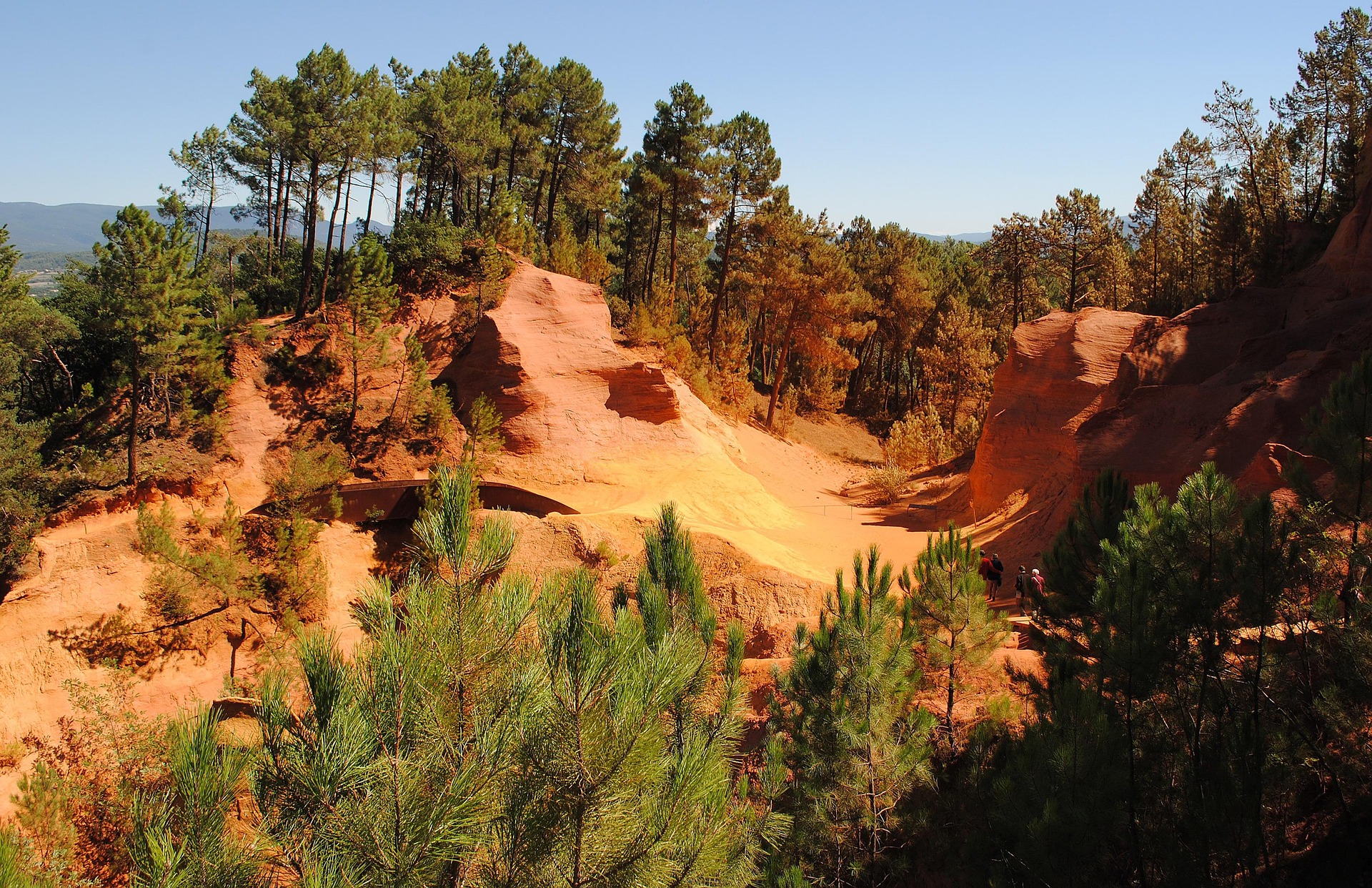
Roussillon, a few kilometres to the east, sits atop France's most important deposits of natural ochre. The village's facades, its cliffs, its paths and even the dust on the road are saturated in shades of red, orange, amber and deep sienna. It is one of the most visually extraordinary villages in Europe.
Oppède-le-Vieux is less famous and all the more precious for it. Almost entirely abandoned at the beginning of the 20th century, it was gradually reclaimed by artists and craftspeople from the 1950s onwards, leaving the village in a state of extraordinary suspension — neither ruin nor restoration, but something between memory and present.
Ménerbes, perched on a long narrow ridge, is where Peter Mayle wrote A Year in Provence. Bonnieux, on the opposite side of the valley, hosts one of the finest village restaurants in the region. Lacoste, dominated by the partially restored château once owned by the Marquis de Sade and now by the fashion designer Pierre Cardin, looks across to Bonnieux with quiet rivalry. Each of these villages has its own light, its own gastronomy and its own quietly devoted clientele.
Lourmarin: art, literature and a royal château
At the southern edge of the Luberon, Lourmarin is the most cosmopolitan and animated of the Luberon villages. Albert Camus, who won the Nobel Prize for Literature in 1957, lived and is buried here. The village is home to galleries, artisan workshops, the finest Saturday morning market in the region, and a Renaissance château that is one of the oldest in Provence.
Fact that tends to provoke a smile from visitors: Ridley Scott, director of Gladiator and Blade Runner, owns a wine estate near the Luberon. He discovered it while filming in the region. We can arrange private visits and tastings at select Luberon estates by arrangement.
The Sénanque Abbey and the lavender plateaus
The Abbaye Notre-Dame de Sénanque, a 12th-century Cistercian monastery built in a narrow valley north of Gordes, is one of the most photographed buildings in France. Each summer, its long facade is framed by a perfect rectangle of lavender that the inhabitant monks cultivate themselves. The abbey remains a working monastery — eight Cistercian brothers live there, produce honey and lavender essence, and welcome visitors in respectful silence. We arrange private guided visits including access to areas not open to the general public.
Beyond Sénanque, the Plateau de Sault and the Plateau de Valensole are the great open-sky lavender landscapes of Provence. Both lie within easy reach of a Luberon base and are best visited in the first two weeks of July, when the bloom reaches its peak.
Wine and gastronomy in the Luberon
The Luberon AOC wine appellation produces elegant, food-friendly reds and increasingly interesting whites from vineyards that benefit from the thermal amplitude of a continental climate moderated by altitude and the Mistral wind. We work with a selection of Luberon estates that offer genuine private tasting experiences — not scripted tourist visits, but real encounters with winemakers in their cellars and among their vines.
The gastronomy of the Luberon is one of the most refined in France. The region holds a remarkable density of great regional tables — in Bonnieux, Gordes, Joucas and around Ménerbes — alongside a small network of family-run village tables, truffle producers in Carpentras, goat-cheese farms in the Mont Ventoux foothills, and olive oil mills that press the Luberon's distinctive AOC oil.
Multi-day Luberon programmes
For groups spending three or more nights in the region, we design integrated Luberon programmes combining village exploration, wine and gastronomy, hot-air balloon flights at sunrise, electric-bike tours through the vines, and private cooking workshops in restored bastides. The Luberon rewards slowness — and a properly designed three-day programme is enough to feel that you genuinely understand the place rather than merely passing through it.
Frequently asked questions
How far is the Luberon from Marseille?
The heart of the Luberon (Gordes, Roussillon) is approximately 1 hour to 1h15 from Marseille by private vehicle. We organise full-day excursions from Marseille or multi-day programmes with accommodation in the Luberon.
What is the best time of year to visit the Luberon?
Spring (April to June) and early autumn (September to October) are ideal. The lavender blooms typically in late June and early July, which is the most visually dramatic period. Summer is hot and more crowded. Winter is peaceful and remarkably atmospheric.
Which villages should we prioritise on a one-day Luberon tour?
For a single day, we recommend Gordes (the iconic golden-stone village), Roussillon (the ochre cliffs), and Lourmarin (the most cosmopolitan, with its château and Saturday market). For two days, we add Ménerbes, Bonnieux, Oppède-le-Vieux and the Sénanque Abbey.
Where do you recommend staying in the Luberon?
For 5-star hotels: La Coquillade (a wine estate hotel near Gargas), the Phébus & Spa near Joucas, and the Bastide de Gordes. For private villa rentals: we have a curated portfolio of restored mas and bastides, available on full-buyout terms with private chef and staff.
Can you organise private wine tastings at Luberon estates?
Yes. We work with a selected group of Luberon and Côtes-du-Rhône estates that receive our groups privately, often hosted by the winemakers themselves. Tastings can be combined with vineyard walks, cellar dinners, or hands-on blending workshops.
Is the Luberon suitable for active groups?
Excellent for active groups. We organise guided cycling tours through the villages (electric bikes available), walking circuits across the Mont Ventoux foothills, hot-air balloon rides at sunrise over the lavender plateaus, and horseback rides through the Petit Luberon.
What is a good 5-day or 7-day South of France itinerary including the Luberon?
For 5 days: 2 nights in Marseille (city + Calanques), 2 nights in the Luberon (Gordes, Roussillon, lavender, wine estates), 1 night in Aix-en-Provence. For 7 days: add 2 nights in the Camargue or the Côte d'Azur (Saint-Tropez, Èze, Antibes). Each itinerary is fully tailored to your group's pace, interests and season.
Can we visit the Luberon without renting a car?
Yes, and we strongly recommend it. Our chauffeur-guides handle the winding back roads of the Luberon while your group enjoys the landscape, the Provençal lunches and the wine pairings without any driving constraints. Parking in the popular villages (Gordes, Roussillon) is also limited in season — a private driver removes the friction entirely.
How does the Luberon compare to the French Riviera?
The two regions offer entirely different experiences. The Riviera is coastal, glamorous, urban and centred on the sea (Saint-Tropez, Cannes, Monaco). The Luberon is rural, slow, gastronomic and centred on inland landscape and village life. The most rewarding South of France itineraries combine both — typically 3 nights in the Luberon followed by 2 nights on the coast.
Are the Luberon markets worth the trip?
Absolutely. Each village hosts its market on a different morning of the week: Tuesday in Gordes, Friday in Lourmarin and Bonnieux, Saturday in Apt (the largest), Sunday in Coustellet and Isle-sur-la-Sorgue (also famous for its antique dealers). We design itineraries around the best market of the week, followed by a long Provençal lunch at a producer or partner restaurant.